alt text

26224 N Tatum Blvd Ste 10

Phoenix, AZ 85050

(480) 563-4173

(480) 563-5019

Menu
  • Home
  • Our Practice
    • About Dr. Solomon
  • Procedures
    • CLEANINGS & PREVENTION
      • Diagnodent®
      • Digital X-Rays
      • Fluoride Treatment
      • Oral Cancer Exam
      • Oral Hygiene Aids
      • Panoramic X-rays
      • Sealants
      • VELscope® Oral Cancer Screening
      • Dental Exams & Cleanings
      • Dental X-Rays
      • Home Care
      • How to Properly Brush & Floss
    • CEREC CROWNS IN A DAY
    • INVISALIGN®
    • COSMETIC DENTISTRY
      • 3i Dental Implants
      • daVinci™ Veneers
      • Day White®
      • Dental Implants
      • Empress® Restorations
      • Porcelain Inlays
      • Porcelain Onlays
      • Zoom!®
      • Composite Fillings
      • Porcelain Crowns (Caps)
      • Porcelain Fixed Bridges
      • Porcelain Veneers
      • Teeth Whitening
    • PERIODONTAL DISEASE
      • Causes of Periodontal Disease
      • Types of Periodontal Disease
      • Signs & Symptoms of Periodontal Disease
      • Mouth - Body Connection
      • Periodontal Disease and Diabetes
      • Periodontal Disease, Heart Disease and Stroke
      • Periodontal Disease and Pregnancy
      • Periodontal Disease and Osteoporosis
      • Periodontal Disease and Respiratory Disease
      • What is Periodontal (Gum) Disease?
      • Diagnosis
      • Treatment
      • Maintenance
    • RESTORATIONS
      • 3i Dental Implants
      • Air Abrasion
      • Dental Implants
      • Empress® Restorations
      • Inlay Restorations
      • Onlay Restorations
      • Composite Fillings
      • Crowns (Caps)
      • Dentures & Partial Dentures
      • Fixed Bridges
      • Root Canal Therapy
    • ORTHODONTICS
      • What is Orthodontics?
      • What is a Malocclusion?
      • Who Can Benefit From Orthodontics?
      • Orthodontic Treatment (Braces)
      • Orthodontic Treatment Phases
      • Braces for Children
      • Braces for Adults
      • Do Braces Hurt?
      • Care Following Orthodontics – Retainers
      • Why Straighten Teeth?
    • ORAL & MAXILLOFACIAL SURGERY
      • Bone Grafting
      • Dental Implants
      • 3i Dental Implants
      • Impacted Canines
      • Mini Dental Implants
      • Sleep Apnea Appliances
      • Wisdom Teeth Extractions
    • PERIODONTICS
      • What is a Periodontist?
      • When to See a Periodontist
      • Antibiotic Treatment
      • Bone Grafting
      • Bruxism
      • Crown Lengthening
      • Gum Grafting
      • Gum Recession
      • Oral Cancer Exam
      • Periodontal Scaling & Root Planing
      • Pocket Irrigation
      • Pocket Reduction Surgery
      • Prophylaxis (Teeth Cleaning)
      • Regenerative Procedures
      • Ridge Modification
      • Root Amputation
      • Soft Tissue Grafting
    • ENDODONTICS
      • Cracked Tooth
      • Root Amputation
      • Root Canal Retreatment
      • Root Canal Therapy
    • DENTAL ANXIETY AND FEAR
    • LASER DENTISTRY
    • DENTAL EMERGENCIES
    • PROSTHODONTICS
      • Crowns (Caps)
      • Dental Implants
      • Dentures & Partial Dentures
      • Fixed Bridges
      • Porcelain Veneers
    • PEDIATRIC DENTISTRY
      • Baby Bottle Tooth Decay
      • Care for Your Child’s Teeth
      • DENTAL EMERGENCIES
      • Dental Radiographs (X-Rays)
      • Does Your Child Grind His or Her Teeth at Night?
      • Early Orthodontic Treatment
      • Eruption of Your Child’s Teeth
      • First Visit
      • Fluoride
      • Good Diet
      • How Often Should Children Have Dental Checkups?
      • How to Prevent Cavities
      • Mouth Guards
      • Pacifiers and Thumb Sucking
      • Pediatric Dental Appliances
      • Perinatal and Infant Oral Health
      • Sealing Out Tooth Decay
      • Sippy Cups
      • Tobacco Use
      • Tongue Piercing
      • What is Pulp Therapy?
      • What’s the Best Toothpaste for My Child?
      • When Should Children Have Their First Dental Vi...
      • When Will My Baby Start Getting Teeth?
      • Why Are Primary Teeth Important?
      • Xylitol – Reducing Cavities
    • SURGICAL INSTRUCTIONS
      • After Dental Implant Surgery
      • After Tooth Extractions
    • SLEEP APNEA
  • Promotions
  • Patient Forms
  • Care Credit Financing
  • FAQS
    • Links
  • Dental Videos
    • Smile Analysis
  • Contact Us
    • Appointment Request
  • Blog
  • Patient Reviews
    • Video Testimonials
  • Patient Education
    • Educational Videos
    • Cosmetic & General Dentistry
    • Emergency Care
    • Endodontics
    • Implant Dentistry
    • Oral Health
    • Oral Hygiene
    • Oral Surgery
    • Orthodontics
    • Pediatric Dentistry
    • Periodontal Therapy
    • Technology
  • Home >
  • Articles >
  • Cosmetic & General Dentistry >
  • TMD

TMD

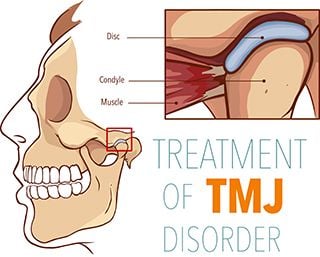
TMDThe temporomandibular joints (TMJ) connect the temporal bones on each side of the skull to the mandible, or lower jawbone. These complex, hinge-like joints allow the mouth to open and close, move back and forth, and slide from side to side. Muscle, bone, and cartilage work together for easy and comfortable facial movement so we can speak, eat, swallow, yawn, and smile.

When the joint doesn’t function as smoothly as it should, the limited movement and discomfort that result could be caused by Temporomandibular Joint Disorder, or TMD.

Temporomandibular Joint Disorder can develop due to arthritis, bruxism (tooth grinding), genetics, an injury or infection near the jaw, a misaligned bite, or a combination of factors. Sometimes the cause is unclear. TMD could be indicated if you suffer from any of these symptoms:

  • Painful chewing
  • Persistent pain and discomfort around the TMJ or in the face or neck
  • Earaches or ringing in the ears
  • Changes in bite alignment
  • Muscle spasms near the jaw
  • Clicking, popping, or grating noises when the jaw moves
  • Jaws that are limited in movement or lock open or shut

If you suspect you might have TMD, your dentist or doctor will conduct a careful examination of your temporomandibular joints, their range of movement, and your head and neck. When needed, imaging studies can be used for further examination of the joint.

TMD Treatments

Often, conservative treatment is effective in treating TMD. Your dentist or doctor will tailor treatment to the cause and symptoms of your TMD:

  • Use of over-the-counter pain relievers, ice packs, and moist heat compresses
  • Behavior modification for habits which can cause jaw pain (gum chewing, jaw clenching, nail biting, poor posture)
  • Techniques for relaxation and stress relief
  • Muscle relaxants, corticosteroids, or anti-inflammatory medication
  • Physical therapy
  • A custom-fitted mouthguard, bite plate, or bite splint to protect teeth and jaw from the pressures of tooth grinding
  • Dental treatment to improve minor bite misalignment
  • Orthodontic treatment to treat more serious bite misalignment

If necessary, surgical procedures can provide more extensive examinations and treatment. These include:

  • Arthroscopy: A minimally invasive procedure performed under anesthesia, which uses a thin tube with a video lens and light inserted through a small incision in front of the ear. This technology allows the surgeon to get a close look at the joint and the area surrounding it. Arthroscopic surgery can repair some types of TMJ damage.
  • Arthroplasty: Surgery performed under anesthesia can repair, replace, or reposition damaged parts of the joint. Arthroplasty can be used to remove bony growths, repair or replace the articular disc that cushions your joint, and access areas that an arthroscopy can’t.

Jaw pain isn’t always due to TMD, and many cases of TMD are temporary. But frequent discomfort, limited movement, or any other persistent symptoms are a good reason to see your dentist or doctor for a thorough examination and diagnosis. Prompt treatment will help prevent further damage to the joint and make facial and jaw movement comfortable once again.

  • Educational Videos
  • Cosmetic & General Dentistry
  • Emergency Care
  • Endodontics
  • Implant Dentistry
  • Oral Health
  • Oral Hygiene
  • Oral Surgery
  • Orthodontics
  • Pediatric Dentistry
  • Periodontal Therapy
  • Technology

Hours of Operation

Monday:

8:00 am-5:00 pm

Tuesday:

8:00 am-5:00 pm

Wednesday:

8:00 am-5:00 pm

Thursday:

8:00 am-5:00 pm

Friday:

8:00 am-1:00 pm

Saturday:

Closed

Sunday:

Closed

Connect With Us

Our Location

Phoenix dentist, Solomon T. Woldesilassie,DDS,PC is a dental professional dedicated to general, family, and cosmetic dentistry with services including dental exams, dental makeovers, teeth whitening, veneers, crowns, x-rays, fluoride, cleanings, and more. Please come and visit Phoenix, AZ dentist, Solomon T. Woldesilassie,DDS,PC.

SOLOMON T. WOLDESILASSIE, DDS, PC
Email: [email protected]
Phone: 480-563-4173
Url: http://www.drsolomonsmile.com/
26224 North Tatum Blvd #10, Phoenix, AZ 85050

  • Copyright © 2026 MH Sub I, LLC dba Officite
  • Admin Log In
  • Site Map