alt text

26224 N Tatum Blvd Ste 10

Phoenix, AZ 85050

(480) 563-4173

(480) 563-5019

Menu
  • Home
  • Our Practice
    • About Dr. Solomon
  • Procedures
    • CLEANINGS & PREVENTION
      • Diagnodent®
      • Digital X-Rays
      • Fluoride Treatment
      • Oral Cancer Exam
      • Oral Hygiene Aids
      • Panoramic X-rays
      • Sealants
      • VELscope® Oral Cancer Screening
      • Dental Exams & Cleanings
      • Dental X-Rays
      • Home Care
      • How to Properly Brush & Floss
    • CEREC CROWNS IN A DAY
    • INVISALIGN®
    • COSMETIC DENTISTRY
      • 3i Dental Implants
      • daVinci™ Veneers
      • Day White®
      • Dental Implants
      • Empress® Restorations
      • Porcelain Inlays
      • Porcelain Onlays
      • Zoom!®
      • Composite Fillings
      • Porcelain Crowns (Caps)
      • Porcelain Fixed Bridges
      • Porcelain Veneers
      • Teeth Whitening
    • PERIODONTAL DISEASE
      • Causes of Periodontal Disease
      • Types of Periodontal Disease
      • Signs & Symptoms of Periodontal Disease
      • Mouth - Body Connection
      • Periodontal Disease and Diabetes
      • Periodontal Disease, Heart Disease and Stroke
      • Periodontal Disease and Pregnancy
      • Periodontal Disease and Osteoporosis
      • Periodontal Disease and Respiratory Disease
      • What is Periodontal (Gum) Disease?
      • Diagnosis
      • Treatment
      • Maintenance
    • RESTORATIONS
      • 3i Dental Implants
      • Air Abrasion
      • Dental Implants
      • Empress® Restorations
      • Inlay Restorations
      • Onlay Restorations
      • Composite Fillings
      • Crowns (Caps)
      • Dentures & Partial Dentures
      • Fixed Bridges
      • Root Canal Therapy
    • ORTHODONTICS
      • What is Orthodontics?
      • What is a Malocclusion?
      • Who Can Benefit From Orthodontics?
      • Orthodontic Treatment (Braces)
      • Orthodontic Treatment Phases
      • Braces for Children
      • Braces for Adults
      • Do Braces Hurt?
      • Care Following Orthodontics – Retainers
      • Why Straighten Teeth?
    • ORAL & MAXILLOFACIAL SURGERY
      • Bone Grafting
      • Dental Implants
      • 3i Dental Implants
      • Impacted Canines
      • Mini Dental Implants
      • Sleep Apnea Appliances
      • Wisdom Teeth Extractions
    • PERIODONTICS
      • What is a Periodontist?
      • When to See a Periodontist
      • Antibiotic Treatment
      • Bone Grafting
      • Bruxism
      • Crown Lengthening
      • Gum Grafting
      • Gum Recession
      • Oral Cancer Exam
      • Periodontal Scaling & Root Planing
      • Pocket Irrigation
      • Pocket Reduction Surgery
      • Prophylaxis (Teeth Cleaning)
      • Regenerative Procedures
      • Ridge Modification
      • Root Amputation
      • Soft Tissue Grafting
    • ENDODONTICS
      • Cracked Tooth
      • Root Amputation
      • Root Canal Retreatment
      • Root Canal Therapy
    • DENTAL ANXIETY AND FEAR
    • LASER DENTISTRY
    • DENTAL EMERGENCIES
    • PROSTHODONTICS
      • Crowns (Caps)
      • Dental Implants
      • Dentures & Partial Dentures
      • Fixed Bridges
      • Porcelain Veneers
    • PEDIATRIC DENTISTRY
      • Baby Bottle Tooth Decay
      • Care for Your Child’s Teeth
      • DENTAL EMERGENCIES
      • Dental Radiographs (X-Rays)
      • Does Your Child Grind His or Her Teeth at Night?
      • Early Orthodontic Treatment
      • Eruption of Your Child’s Teeth
      • First Visit
      • Fluoride
      • Good Diet
      • How Often Should Children Have Dental Checkups?
      • How to Prevent Cavities
      • Mouth Guards
      • Pacifiers and Thumb Sucking
      • Pediatric Dental Appliances
      • Perinatal and Infant Oral Health
      • Sealing Out Tooth Decay
      • Sippy Cups
      • Tobacco Use
      • Tongue Piercing
      • What is Pulp Therapy?
      • What’s the Best Toothpaste for My Child?
      • When Should Children Have Their First Dental Vi...
      • When Will My Baby Start Getting Teeth?
      • Why Are Primary Teeth Important?
      • Xylitol – Reducing Cavities
    • SURGICAL INSTRUCTIONS
      • After Dental Implant Surgery
      • After Tooth Extractions
    • SLEEP APNEA
  • Promotions
  • Patient Forms
  • Care Credit Financing
  • FAQS
    • Links
  • Dental Videos
    • Smile Analysis
  • Contact Us
    • Appointment Request
  • Blog
  • Patient Reviews
    • Video Testimonials
  • Patient Education
    • Educational Videos
    • Cosmetic & General Dentistry
    • Emergency Care
    • Endodontics
    • Implant Dentistry
    • Oral Health
    • Oral Hygiene
    • Oral Surgery
    • Orthodontics
    • Pediatric Dentistry
    • Periodontal Therapy
    • Technology
  • Home >
  • Articles >
  • Cosmetic & General Dentistry >
  • Snoring and Sleep Apnea

Snoring and Sleep Apnea

Is it snoring or sleep apnea?
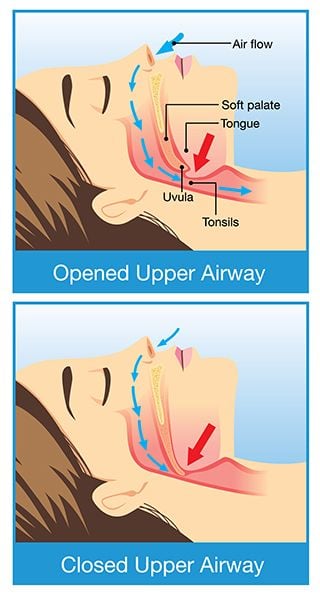
snoring and sleep apneaSnoring occurs when soft tissues in the throat area relax during sleep, partially blocking airways and vibrating with the passage of air. It’s this vibration that causes that distinctive snoring sound. If you’re one of the millions of people who snore, you know how those nocturnal noises can interfere with your peaceful sleep and the sleep of those around you.

Snoring can also be a symptom of sleep apnea, which is a serious medical condition. The word “apnea” is derived from the Greek word for “breathless.” When you suffer from sleep apnea, you briefly stop breathing during sleep.

Your body responds by waking every time you need to begin breathing properly again, often causing you to choke or gasp for breath. This cycle can repeat dozens of times per hour. While you may think you’ve slept through the night, you have never gotten the deep sleep your body needs to restore itself mentally and physically.

Types of Sleep Apnea

  • Obstructive Sleep Apnea (OSA)

Obstructive sleep apnea is the most common form of sleep apnea and is caused by an obstructed airway. The throat muscles may relax as you sleep, making it impossible to inhale fully with each breath. Obstruction can also be caused by a physical condition such as a deviated septum, excess throat tissue, or enlarged tongue or tonsils. The size and position of your jaw can affect your breathing as well.

  • Central Sleep Apnea (CSA)

Central sleep apnea occurs when your brain fails to send the proper signals to the muscles that control breathing. Sleepers with CSA either stop breathing momentarily or take such shallow breaths that they can’t get sufficient air into their lungs.

  • Complex Sleep Apnea

Complex sleep apnea combines features of both obstructive and central sleep apnea.

While men are more likely to develop this condition, sleep apnea can affect anyone. Factors such as obesity, increasing age, alcohol use, certain medications and drugs, medical conditions, and a family history of sleep apnea can also increase the risk of developing OSA and CSA.

How Sleep Apnea Affects Your Life

You (or your partner) may suspect sleep apnea if your sleep is interrupted by frequent loud snoring, choking, or snorting sounds, or if you appear to stop breathing or wake up short of breath throughout the night.

Sleep apnea affects your waking life as well. You might feel frequent daytime drowsiness or fatigue. You could have difficulty falling asleep at night or fall asleep involuntarily during the day. You might experience morning headaches or a sore throat, or dry mouth when you wake up. Your quality of life can suffer, as insufficient sleep can lead to:

  • Moodiness
  • Frustration
  • Depression
  • Decreased libido
  • Memory problems
  • Inability to focus

If you have any of the symptoms of sleep apnea, you should seek prompt treatment. Sleep apnea can seriously impact health and has been linked to an increased risk of:

  • High blood pressure
  • Heart disease
  • Stroke
  • Dangerous reactions to medications
  • Dangerous reaction to general anesthesia
  • Accidents and injuries caused by fatigue and slower reaction time

What kind of treatments are available?

Treatments ranging from behavior modification to surgery are tailored to the cause and the severity of your sleep apnea:

  • Behavior modification: Losing weight, abstaining from alcohol, changing sleep position, and monitoring medications that affect sleep can be effective in mild cases of OSA.
  • Oral appliances: These comfortable, custom-fitted devices can advance the jaw or hold the tongue forward to maximize airway space.
  • Continuous Positive Airway Pressure (CPAP) machines: For those with moderate to severe sleep apnea, PAP machines provide pressurized air through a tube attached to a mask, delivering a gentle flow of air to keep airways open through the night.
  • Surgery: Surgical procedures can remove or reduce the obstructions causing OSA. Medical implants have been successful in treating both OSA and CSA for patients who qualify for these treatments.

If you suspect your snoring is something more than a nightly nuisance, ask your dentist or doctor for a referral to a sleep apnea specialist. Proper diagnosis and treatment can help you enjoy the restorative sleep you need for healthier days and healthier nights.

  • Educational Videos
  • Cosmetic & General Dentistry
  • Emergency Care
  • Endodontics
  • Implant Dentistry
  • Oral Health
  • Oral Hygiene
  • Oral Surgery
  • Orthodontics
  • Pediatric Dentistry
  • Periodontal Therapy
  • Technology

Hours of Operation

Monday:

8:00 am-5:00 pm

Tuesday:

8:00 am-5:00 pm

Wednesday:

8:00 am-5:00 pm

Thursday:

8:00 am-5:00 pm

Friday:

8:00 am-1:00 pm

Saturday:

Closed

Sunday:

Closed

Connect With Us

Our Location

Phoenix dentist, Solomon T. Woldesilassie,DDS,PC is a dental professional dedicated to general, family, and cosmetic dentistry with services including dental exams, dental makeovers, teeth whitening, veneers, crowns, x-rays, fluoride, cleanings, and more. Please come and visit Phoenix, AZ dentist, Solomon T. Woldesilassie,DDS,PC.

SOLOMON T. WOLDESILASSIE, DDS, PC
Email: [email protected]
Phone: 480-563-4173
Url: http://www.drsolomonsmile.com/
26224 North Tatum Blvd #10, Phoenix, AZ 85050

  • Copyright © 2026 MH Sub I, LLC dba Officite
  • Admin Log In
  • Site Map